
News

The Farming Footprint

By Nick Dunn

There has been a lot of discussion recently on how the agricultural industry will be affected by the world gaining more recognition towards carbon. This specifically spiked when our Minister of Environment and Climate Change, Steven Guilbeault, brought forward his fertilizer plan. His plan is to achieve a 30% fertilizer reduction below 2020 levels by 2030.  

The world’s population is close to 8 billion people, and we do not have enough food to feed everyone as it stands. Here in Canada, we are fortunate to be able to produce far more than we can consume, which makes us a reliable country for feeding the future. In conjunction with Guilbeault’s plan, the federal government has a goal to increase international agri-food trade to $75 billion by 2025 (which was surpassed in 2021 by $7 billion) mainly led by unexpected global issues. To support feeding the world’s population and maintain Canada’s export expectations, we rely on synthetic fertilizers. Fertilizer use is essential for crop production and along with other technological advances, has allowed us to increase yields over the past 40 years. It gives us a fighting chance. 

With this plan, Canadian farmers could potentially lose $48 billion in revenue, according to a study from Fertilizer Canada, due to reduced yields. Reduced fertilizer use goes hand in hand with reduced yields. Globally, there are some other similar climate change policies being brought to the table. If many follow suit, there will be food shortages that we have never seen before. If you thought food was expensive today, I’m afraid to tell you the future doesn’t look any brighter. In fact, the worst is yet to come. Does Ottawa want to be a contributor to starting a global food crisis? 

For those who are in the agricultural industry, it’s important to bring awareness to what we do, how we do it, and why we do it. Our federal government is overlooking the consequences with these erratic goals and propositions due to a lack of knowledge. The agricultural industry has been making changes to better the quality of the soil and air without impacting productivity and this seems to be unrecognized. We’re stewards. We want to leave the land in better shape than when we received it. This is part of our succession plan: to promote longevity. The fertilizer industry already promotes the use of the 4R Nutrient Management plan, which is intended to improve fertilizer use and efficacy. The right source, right rate, right time and in the right place is a guide to promote efficient farming practices and help keep nutrients in the soil. Not only does this model help the pockets of our producers, but it has been proven to lower emissions. When we put fertilizer in the ground with the 4R stewardship model, we’re essentially replacing what we are removing with harvest, whether it be removed from the seed or the straw. If we didn’t, we would be considered soil miners, not producers. After long periods of abusing soil quality, we wouldn’t be able to produce anything. There are many other advancements that producers have incorporated to help reduce emissions like Implementing diesel exhaust fluid into equipment, feed and manure management, crop rotation, and reduced tillage. The Flagstaff County Agriculture Service Board (ASB), along with many other ASBs throughout Alberta, have been writing letters to the provincial and federal governments to reconsider how this goal is measured and achieved. Consider our world, country, economy, and industry.   

Nick Dunn is Flagstaff County’s Agricultural Fieldman. He can be reached via email at: ndunn@flagstaff.ab.ca or by phone at: 780-384-4138.
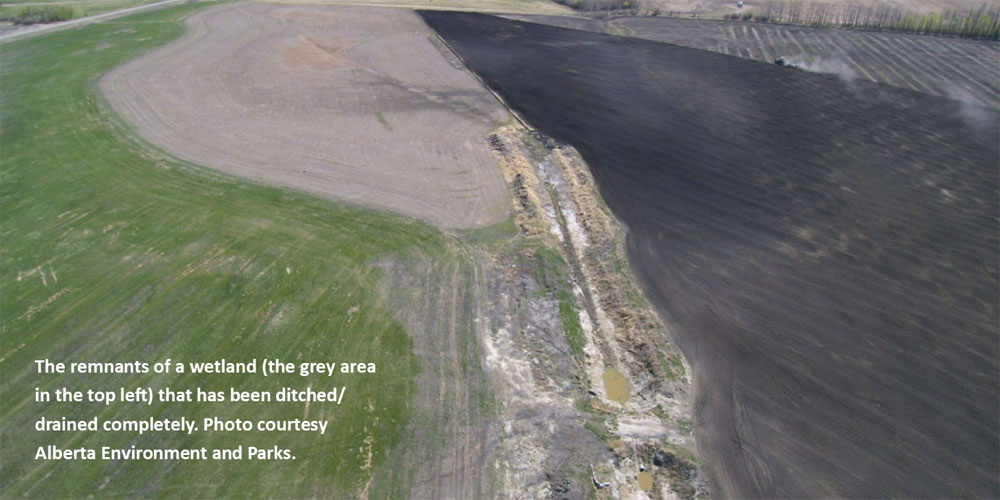
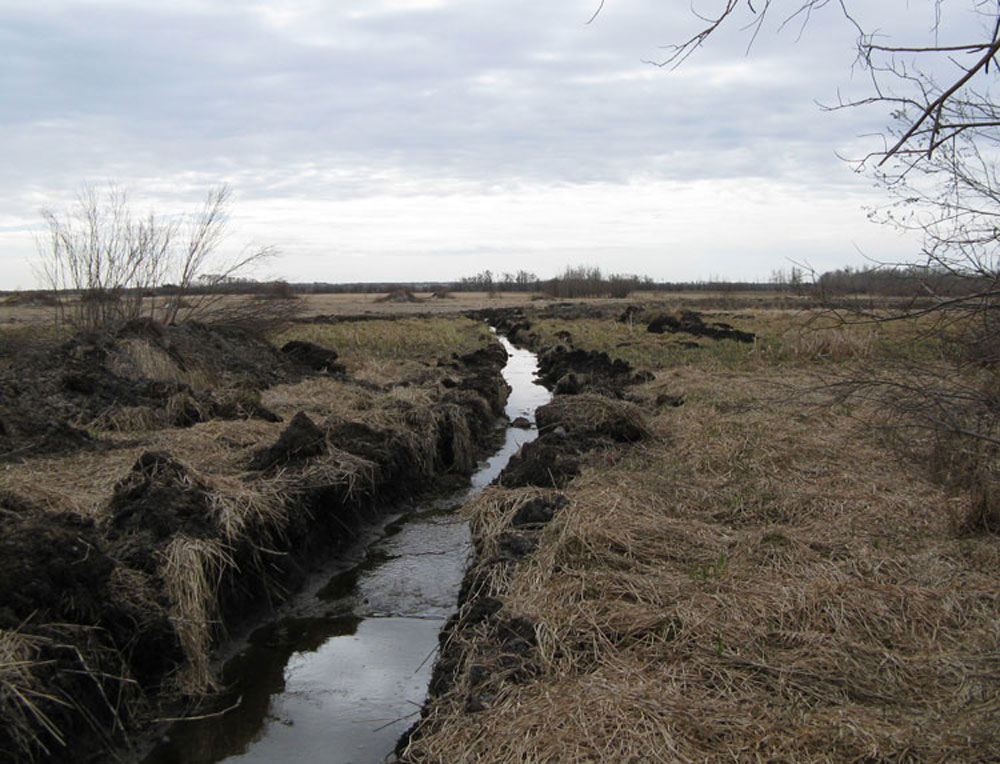
A landowner’s guide to drainage and brush removal

drainage copy copy copy copy

Flagstaff County landowners should be aware of several important factors when it comes to drainage and brush removal.

Did you know that provincial legislation is in place to deal with unauthorized drainage on private property? Did you also know that municipal bylaws and policies exist to address brush removal on right-of-ways?

Please be aware that there is an approval and licensing process prior to commencing these types of activities. Also, please keep in mind that substantial fines may be levied for any contraventions of provincial legislation or municipal bylaws.

The following has been compiled as a helpful guide for landowners.

Unauthorized drainage

All water in Alberta is subject to provincial jurisdiction under the Water Act.

Therefore, all activities impacting a water body – including drainage and infilling – require provincial approval.

This includes ephemeral water bodies (a shallow water body that temporarily contains water after spring snowmelt or a heavy rainfall and typically dries up within a matter of days to weeks).

unauthorized copy copy copy copyUnder the Water Act, no wetland may be drained or altered without first receiving provincial authorization.
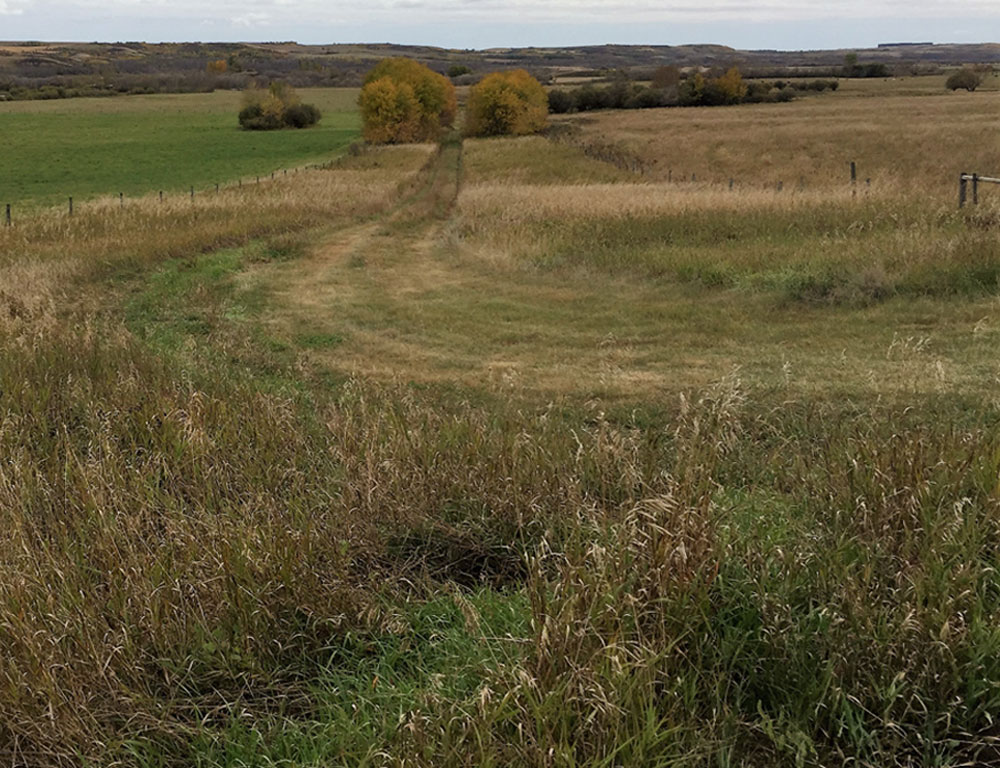
Natural surface water bodies, including their shorelines, riparian areas and upland drainage areas, play an important role in the environment. Unfortunately, this important role is not well recognized by the general public.

These water bodies and their riparian and upland areas provide some of the following functions:

  • Absorb, collect and store water to reduce flooding;
  • Replenish groundwater to maintain water tables for wells;
  • Provide a supply of water for household and livestock use;
  • Conserve species, landscapes and habitats by providing food, homes and nurseries for fish and wildlife;
  • Act as carbon sinks by storing carbon from the atmosphere;
  • Act as mini microclimates (e.g. water cycle);
  • Help to filter out sediment, absorb nutrients, remove chemical residues and treat wastewater;
  • Control the spread of salts into cropland;
  • Provide a source of high quality hay; and,
  • Provide a resource for humans (e.g. recreational, medicinal, cultural, archeological, etc.).

Unauthorized drainage can oftentimes have an adverse effect on wetlands, destroying habitat upon which wildlife and pollinators depend. It can ultimately lead to added expenses for residents in the affected municipality.

Under the province’s Water Act, a licence is required to divert and use surface or ground water in Alberta.

The licence identifies the water source, location of the diversion site, volume, rate and timing of water to be diverted, priority of the “water right” established by the licence, and any conditions the diversion must adhere to.

Licences can be issued for temporary diversions up to a maximum of one year, or for longer time periods, depending on the project type.

Activities in or near a wetland may also be subject to the Alberta Wetland Policy. It is the landowner’s responsibility to ensure all regulatory requirements are met prior to commencing work in or near a wetland. Approval officers will work with landowners to ensure all applicable regulatory requirements are considered.

For an application form, visit the Alberta Environment and Parks (AEP) website and look under Forms/Applications.

After an application has been submitted, a Water Act licence or a preliminary certificate may be issued. The preliminary certificate is a “promised” water allocation. Once its conditions have been fulfilled, this certificate expires and a licence is issued. Note: A preliminary certificate does NOT authorize an activity or a diversion of water.

A licence may be issued where the water source can supply the needs of the applicant and the diversion of water has no adverse effect on the source, surrounding users or the environment.

Anyone who conducts an activity in a water body without provincial approval or who diverts water without a licence may face enforcement action with a maximum fine of $50,000 for an individual and $500,000 for a corporation. If you observe what you believe to be an illegal water-related activity, contact AEP at 1-800-222-6514.

Unauthorized brush removal

proper undeveloped rowUnder the Flagstaff County Traffic Bylaw, “No Person shall use or occupy an Undeveloped Road Allowance, except for the sole purpose of access or travel, where such access or travel does not physically alter or interfere with the Undeveloped Road Allowance, unless a licence authorizing the use or occupation has been issued to the Person pursuant to this Bylaw.”
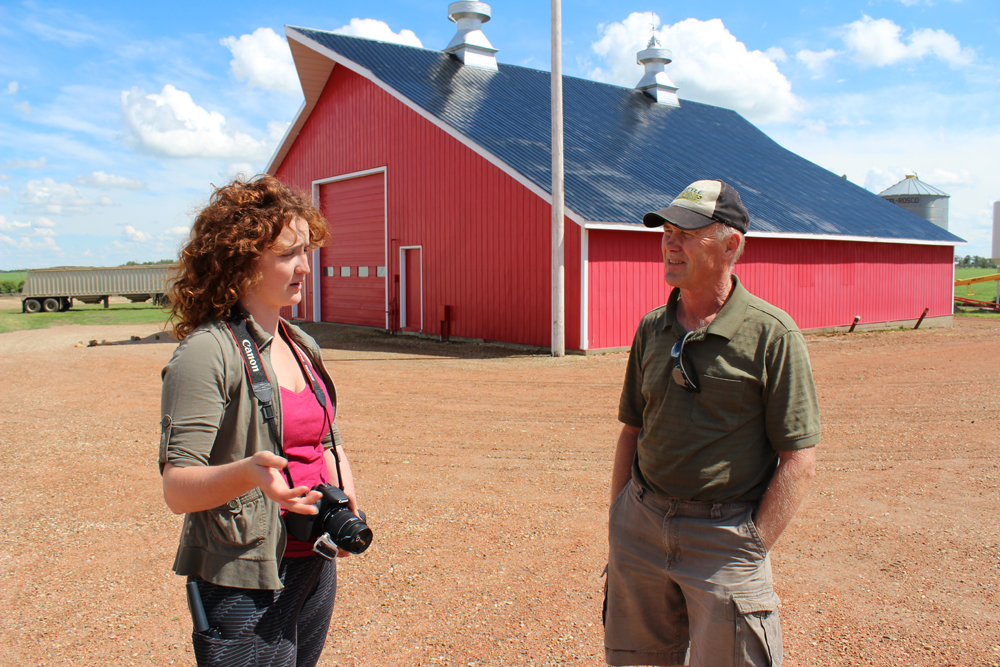
This prohibition applies to removal of vegetation from undeveloped road allowances, placement of structures, equipment or obstructions on undeveloped road allowances and cultivation, and cropping or grazing on undeveloped road allowances. Violators are subject to a fine of up to $10,000.

Unauthorized removal of brush along an undeveloped right-of-way is part of a larger issue known as agricultural encroachment, which is essentially farming upon developed and undeveloped municipal right-of-ways.

The act of farming upon developed and undeveloped municipal right-of-ways is commonplace across the Flagstaff Region.

Unfortunately, this practice produces several challenges for County crews. For the Public Works department, agricultural encroachment can restrict the ability to provide roadway drainage improvements, as well as interfere with the ability to maintain road allowances. For Agricultural Service crews, encroachment on right-of-ways can create difficulties with mowing and weed control.

From observations by staff and concerns brought forth by the public, the following categories of right-of-way encroachment have been identified (in addition to the unauthorized removal of brush along an undeveloped right-of-way):

  • Cropping through an undeveloped right-of-way.
  • Cropping onto a developed right-of-way;
  • Grazing onto a developed right-of-way where a fence encroaches upon the road allowance;
  • Grazing undeveloped right-of-ways;
  • Cropping upon a right-of-way after the County has removed brush along the right-of-way to accommodate field access for large agricultural equipment.

As recommended by the Agricultural Service Board, County Council adopted the following three standards in 2017:

  • The minimal acceptable standard allowed for cultivation and planting of annual and perennial crops adjacent to a developed road will be one metre set back from the “toe” of the slope of the developed road;
  • Any landowner/tenant agriculturally encroaching upon a developed right-of-way will be notified to stay a minimum of one metre from the “toe” of the slope or further dependent upon circumstances;
  • In addition, any crops found within the right-of-way as a result of non-compliance by the landowner/tenant will be removed as part of the County’s regular vegetation control program.

For more information, call the Flagstaff County Administration Office at 780-384-4100.

Heritage Barns Project

hampshire and weller

Flagstaff County has taken inventory of a valuable part of the region’s rich heritage: its barns.

Over the summers of 2016, 2017 and 2018, university student Sydney Hampshire spearheaded this important project to help bolster the understanding and appreciation of rural agricultural history right here in Flagstaff County.

Hampshire gathered information on the locations of barns throughout the county, visiting them, photographing them, interviewing the property owners and posting all relevant information to an online database to be preserved for future generations.

Hampshire documented more than 60 barns within Flagstaff County.

If you haven’t already done so, check out the Barns of Flagstaff County website.  

Heritage Barns of Flagstaff books

heritage barns of flagstaff

barn book 2 copy

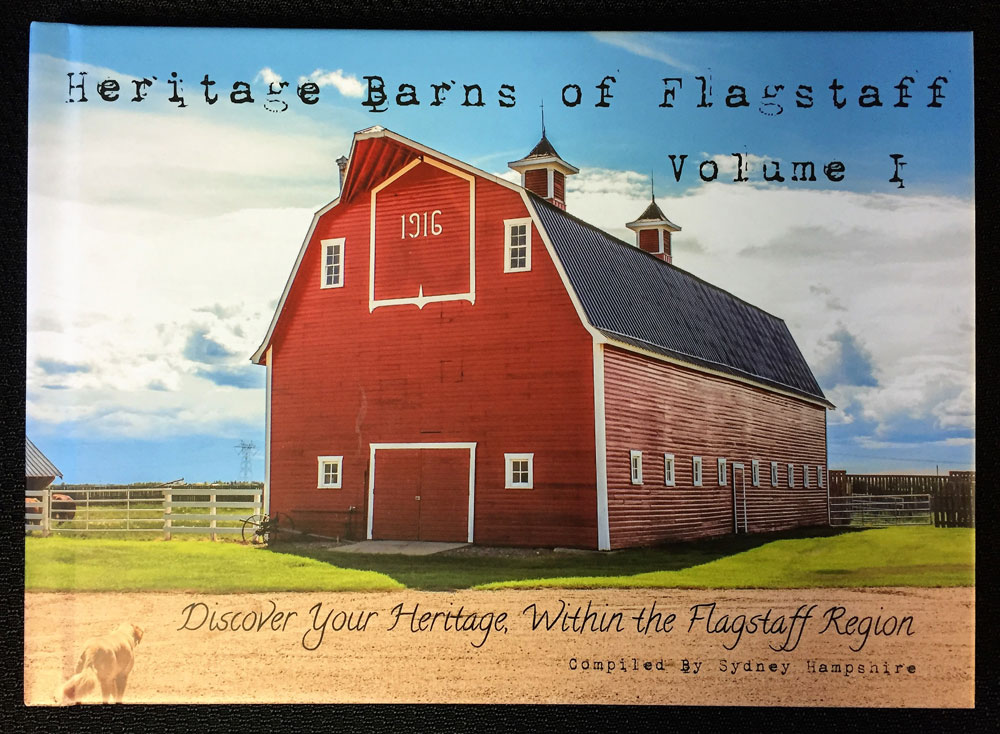
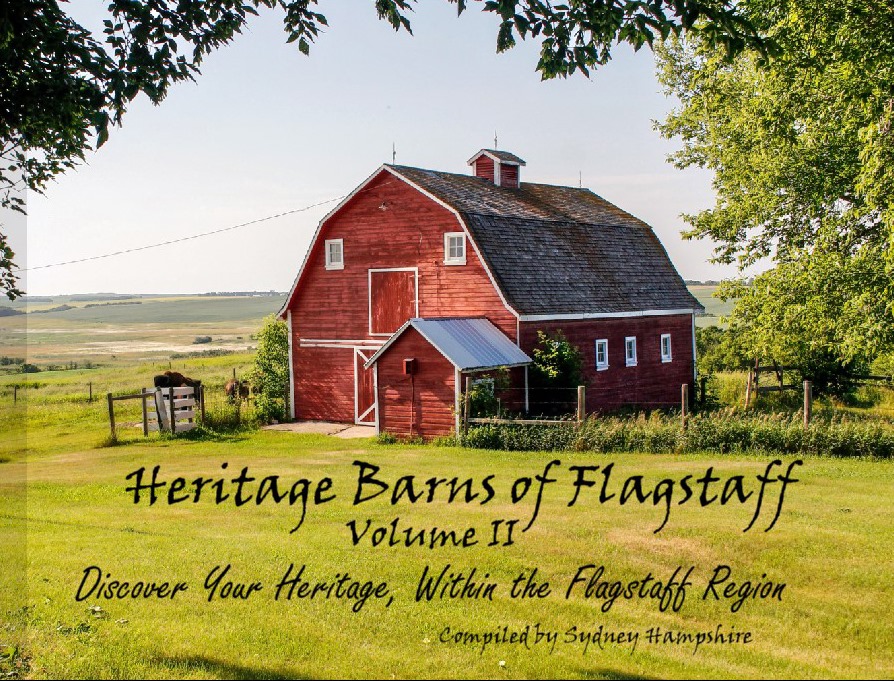
Discover a valuable piece of the Flagstaff Region’s rich agricultural heritage with our two full-colour, coffee-table books!

“Heritage Barns of Flagstaff: Volume I” features nearly two dozen barns from our online database at: https://heritagebarnsofflagstaff.com.

“Heritage Barns of Flagstaff: Volume II” is the follow-up to the popular first volume.

Both volumes are available through the Flagstaff County office. Volume II is $40 per copy, while Volume I is $35 per copy. (Not including the cost of shipping and handling.) Call 780-384-4100 to order your copies today!

In the news

Our Heritage Barns Project has been the subject of the following online articles and video: